
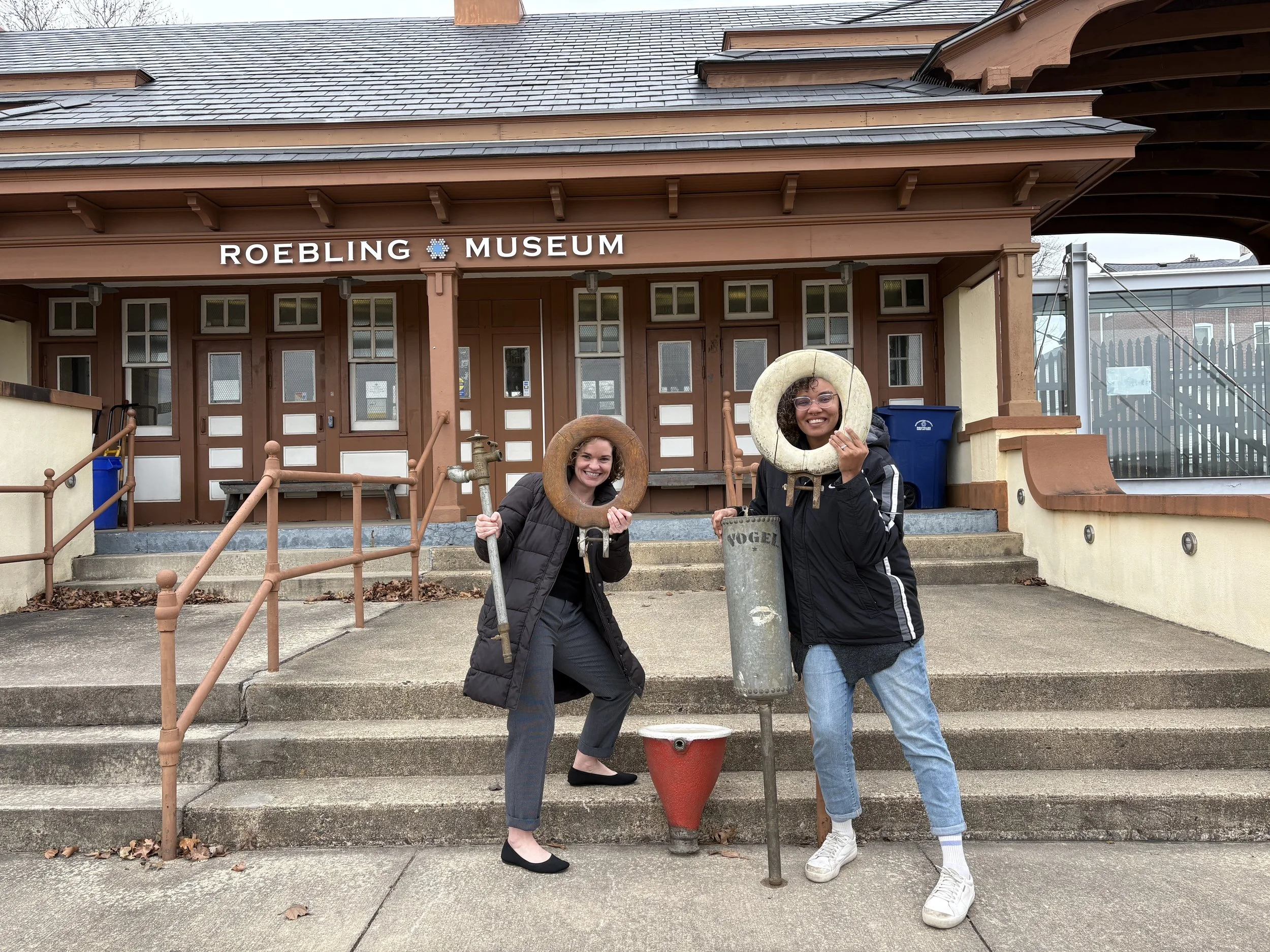
Company Town Toilets
When Roebling Rowhouse opens in 2028, we want visitors to have an authentic experience in one of the former homes for the lowest paid laborers at the Roebling mill. This even includes the bathroom facilities! So naturally, we dug into the hidden history of toilets and sewers in Roebling, in hopes of discovering what types of toilets the rowhouses had in the 1930s.
We discovered that the company likely installed Vogel toilets in the early twentieth century. To recreate the original 1905 bathroom, we needed a Vogel from the right period. We acquired two rare tall-tank Vogels from a Maryland plumber earlier this year, and their restoration is underway so we can install one in Roebling Rowhouse.
We did a Zoom event about the toilets and our research in April 2026. Here’s the top four things we learned as we went “down the research pipes.”
1. Not everyone in Roebling had the same kind of bathroom
Rowhouses were built for the lowest-paid workers at the mill. The larger, semi-detached houses built by the Roebling company for higher-paid workers had full bathrooms with a sink, toilet, and bathtub. The rowhouses had only a toilet, housed in a small, uninsulated wooden shed attached to the back of the house.
2. There were special toilets in the rowhouses to prevent the pipes from freezing
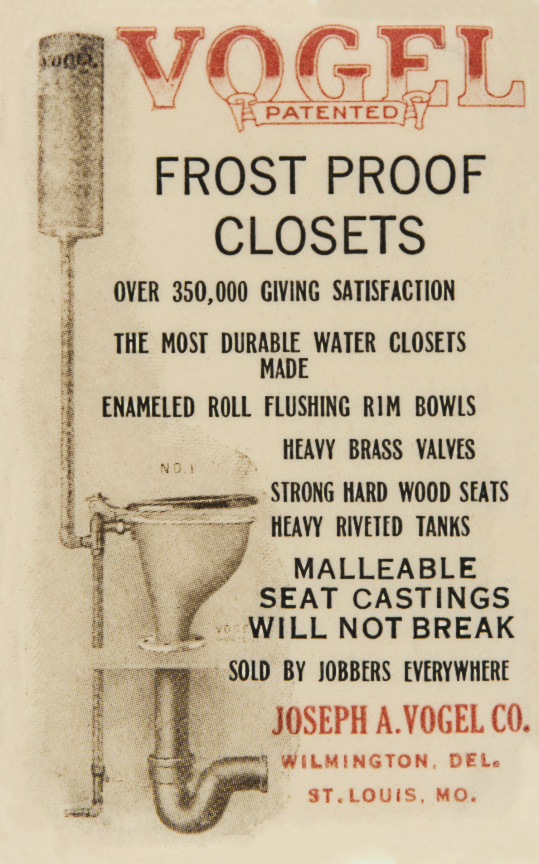
Advertisement for the Vogel Frostproof toilet, the toilets in the rowhomes on Second and Third Avenues
Because rowhouse toilet sheds were unheated, water in the toilet pipes would have frozen in winter. The Roebling company's solution was the Vogel “frostproof” toilet, patented in 1905 by Joseph A. Vogel and manufactured in Wilmington, Delaware. The Vogel commode looked like a conventional flush toilet, but its tank and pipes did not remain filled with water between uses. Sitting down on the toilet seat activated a valve that allowed the tank to fill. Standing up from the seat opened another valve that released water into the bowl and flushed the toilet through gravity. Once the flush was complete, the water drained out of the tank and pipes. That solved the problem of frozen pipes, though it didn’t make the chilly bathroom any more comfortable for rowhouse residents.
3. The company might have needed to put the toilets in to be in compliance with the New Jersey State Tenement Law
Vogel toilets were used in places where inexpensive, frost-resistant plumbing was needed, including factories, schools, prisons, and worker housing. For the Roebling company, they offered a way to provide flush toilets in the inexpensive rowhouses without the cost of installing a conventional bathroom inside the house.
Adding the wooden toilet sheds to the brick rowhouse design could also have been a quick fix to solve a problem: In 1905 New Jersey instituted a law requiring “tenements” to include indoor toilets. Whether the law would have applied to the rowhouses isn’t clear. But perhaps the company didn’t want to take the chance and quickly changed rowhouse toilet plans from outhouses to Vogels.
4. Indoor toilets were a big deal to Roebling’s recent arrivals
Still, for many rowhouse families, whether they arrived from overseas or the southern United States, having an indoor toilet was new and exciting. John Sabo, a pipefitter whose family immigrated from Eastern Europe, said: “For the first time in our lives, they gave us the chance to live in a home with wooden floors, running water, and a toilet inside.” Black workers who came to Roebling during the Great Migration had similar experiences. When Wilbur Henry moved into a house on Amboy Avenue in 1919, it was the first time anyone in the family had used an indoor toilet. The farmhouse where they had been living had only an outhouse—and it was shared by two families.