
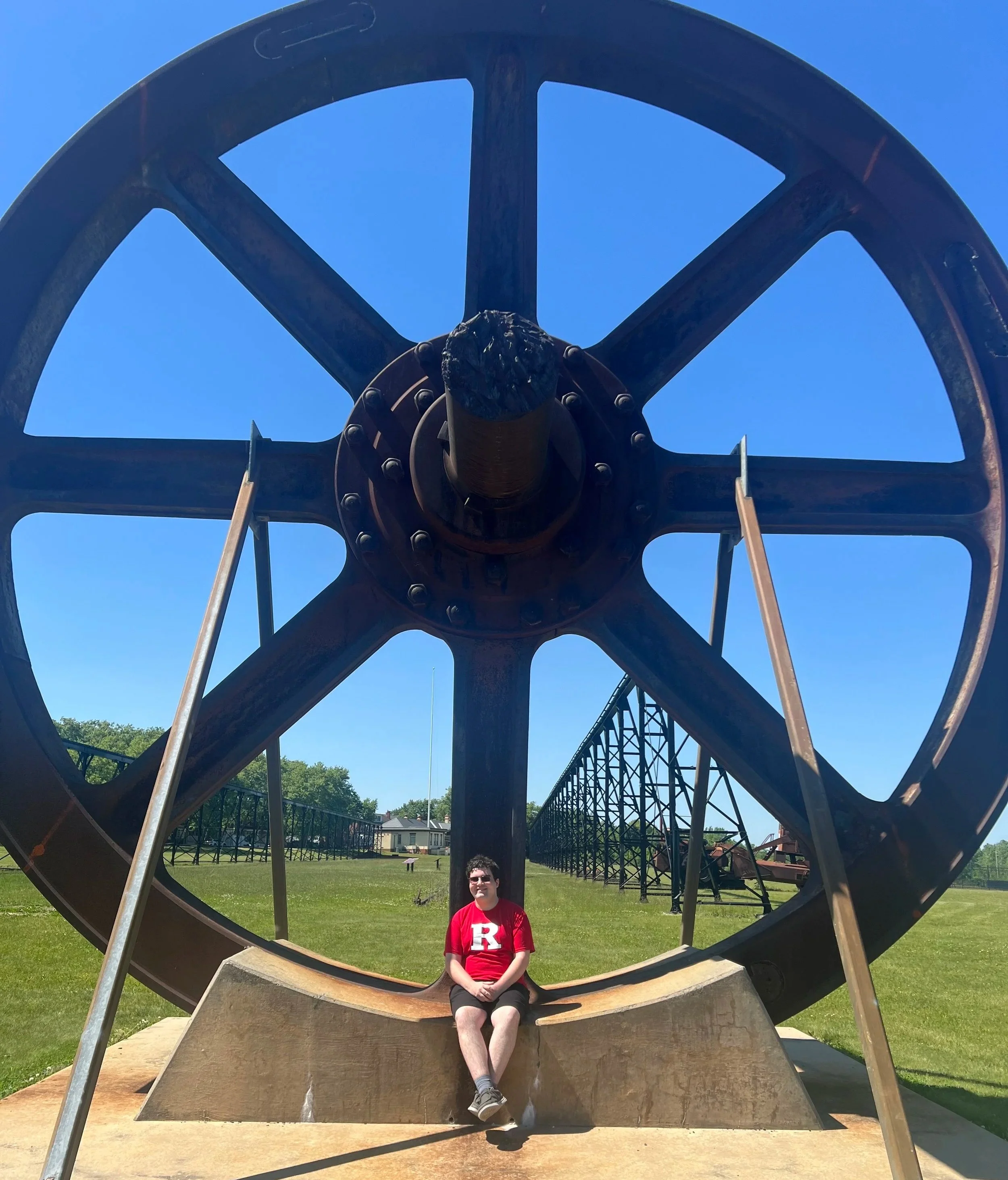
Steven Zavacky: The Veteran Experience in Roebling
Spring 2026 Undergraduate Public History Intern
Rutgers University-New Brunswick
Steven Zavacky was one of our undergraduate interns during the spring 2026 semester. His internship consisted of three parts:
Selecting a Roebling research topic for the development of a prospective museum exhibit. They selected artifacts to display, determined the main goals of the exhibit, and proposed a budget for exhibit materials.
Learning about collections management and archival software.
Presenting their research project to the public via an online presentation and a written blog post.
Steven wrote the following piece reflecting on his time at Roebling Museum. We hope you enjoy reading it!
My internship at Roebling Museum provided valuable insight into the inner workings of local history. When I started, I felt that my time here would be a unique experience due to its location at the heart of a small, yet passionate community. It is also unique among historical sites in New Jersey and the larger east coast since it speaks to a relatively recent history: the final years and closure of the mill here in Roebling. For example, many of the museum’s volunteers either lived in town or nearby when the mill closed and witnessed the consequences for the community.
For my research, I explored the connections between steel workers and veterans. Several veterans in twentieth century wars also worked in steel mills, and this was true in Roebling. The industries were not only connected by the people, but also the narratives surrounding both pathways. Steel work and military participation were both historically romanticized, although both came with much loss, hardship, and fear. These themes all appear in interviews with veterans in the Roebling Museum’s oral history collection.
For example, George Sampson was drafted against his will during the Korean War and felt like a prisoner during his years in Korea (though he looked back on the event as a necessary stepping stone). Soldiers like Bill Spencer experienced the mental toll of losing friends in combat. He even struggled to maintain friendships due to the fear of loss and grief. Spencer also lost his job in Roebling shortly after he left the Air Force due to the closure of the mill. Similarly, Ken Ibach fought in the Second World War in the Apennine Mountains of Italy and suffered through extreme weather conditions. When he returned home to his job at the mill, he confronted harsh work conditions in a different way: a black lung scare. Spencer, Sampson, and Ibach’s oral histories demonstrate a fascinating intersection of these career fields and show how soldiers and steelworkers faced challenges on both fronts.
Overall, my time with the Roebling Museum has proven to be an exceptional experience that has allowed me to explore new facets of the work of public historians. I will certainly always remember my time at Roebling and I am endlessly grateful for having had the opportunity to learn so much valuable history.