
Meet Olivia Troiano
Summer 2025 Undergraduate Intern, Villanova University
Olivia Troiano had no idea that interning at the Roebling Museum would mean a day spent paging through a 1940s Sears catalog in search of a Magic Chef Stove or trying to figure out the age of an old AM radio. But she jumped right in anyway.
Olivia, from Lawrenceville, N.J., is a rising junior at Villanova University majoring in history and English. Last spring, she applied for multiple internships through the university’s Albert Lepage Center for History in the Public Interest. Her first choice? Roebling Museum.
“I became interested in history when I took AP U.S. History in high school,” Olivia says. She credits her history teacher at Notre Dame High School, Jason Patton, who she says presented the subject as more of a story than just facts and dates. “It’s not like a math problem or learning things to memorize. No matter what history you’re learning about, there’s characters and a plot, so it’s almost like reading a novel,” she says. As a result, she finds her history major pairs well with her English major.
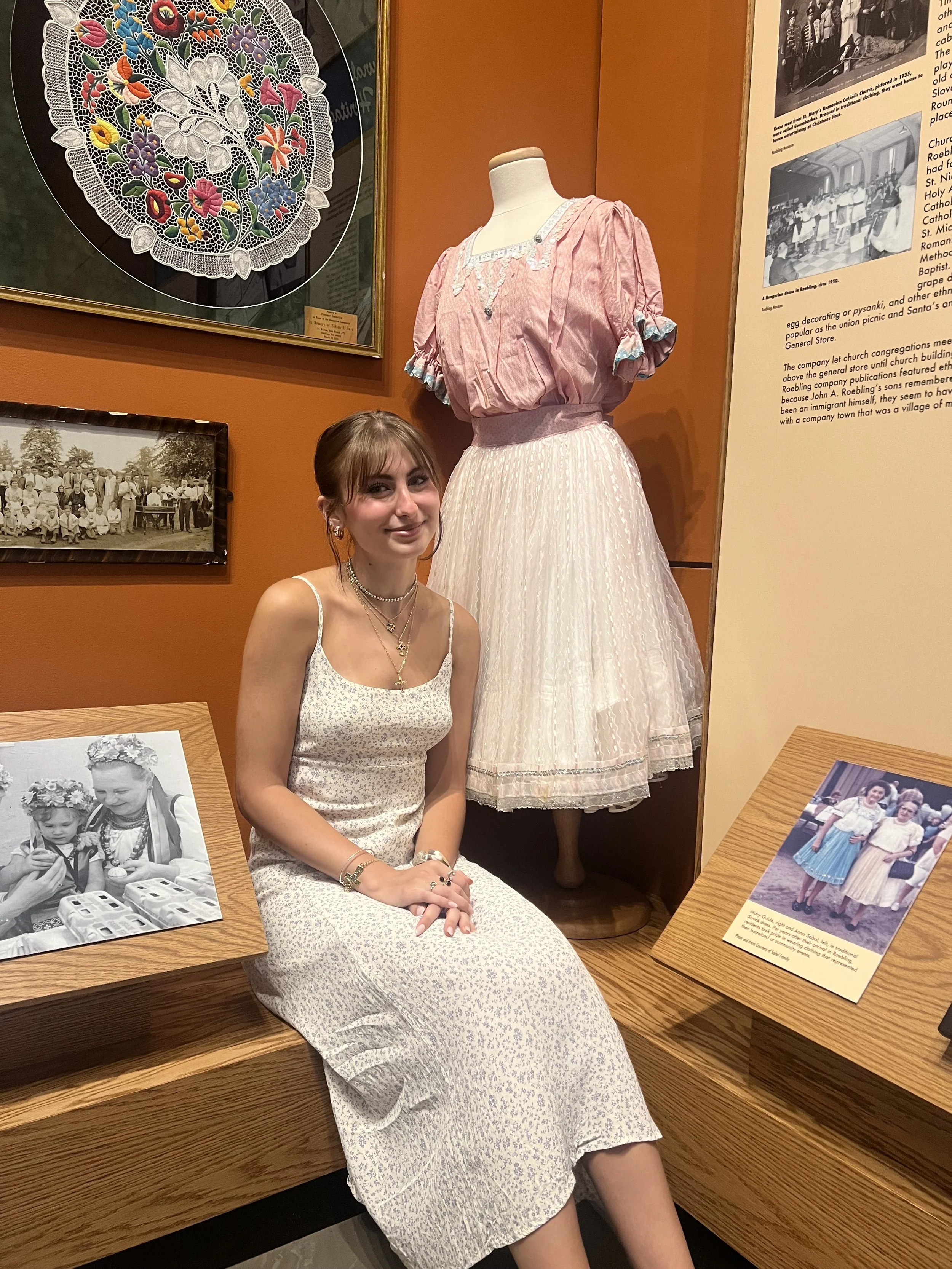
Olivia in her favorite gallery at the museum, the Community Gallery
Arriving at Roebling Museum in June, Olivia worked on several important projects. During her 10-week internship, she
• Scanned the Roebling Record, the newsletter of the Roebling Historical Society (1987–2009) to learn more about Roebling mill families—and to make it easier to connect descendants with information
• Uncovered more about Black workers in Roebling by creating 63 family trees on Ancestry, compiling information that will help us create a future exhibit.
• Numbered and tagged 202 wood-working tools donated to the museum by the grandson of George “Jokie” Malsbury, who made wooden patterns for machine parts at the Roebling mill.
• Researched and inventoried Bibles donated by Hungarian families with print dates ranging from the 1920s to the 1950s.
Participating in such varied projects revealed “just how much research goes into building and running a museum,” especially one that is so connected to the past and present-day communities of Roebling, Olivia says.
Beyond working with the collections, Olivia says she loved when descendants of mill workers came into the museum for tours. “One day, a group of women came in and Lynne was passing around photos from the collection and one of the women identified her husband in the photo,” she says. “It’s so special and unique that visitors can come in and have moments like that and learn about people they grew up with or worked with.”