
Five Facts About Black
History in Roebling
by Sarah Coffman, Program Assistant
As we prepared for our Black history month Zoom program, we dug into African American history in the company town. Here’s the top five things we learned:
1. The John A. Roebling’s Sons Company started recruiting Black workers in 1916
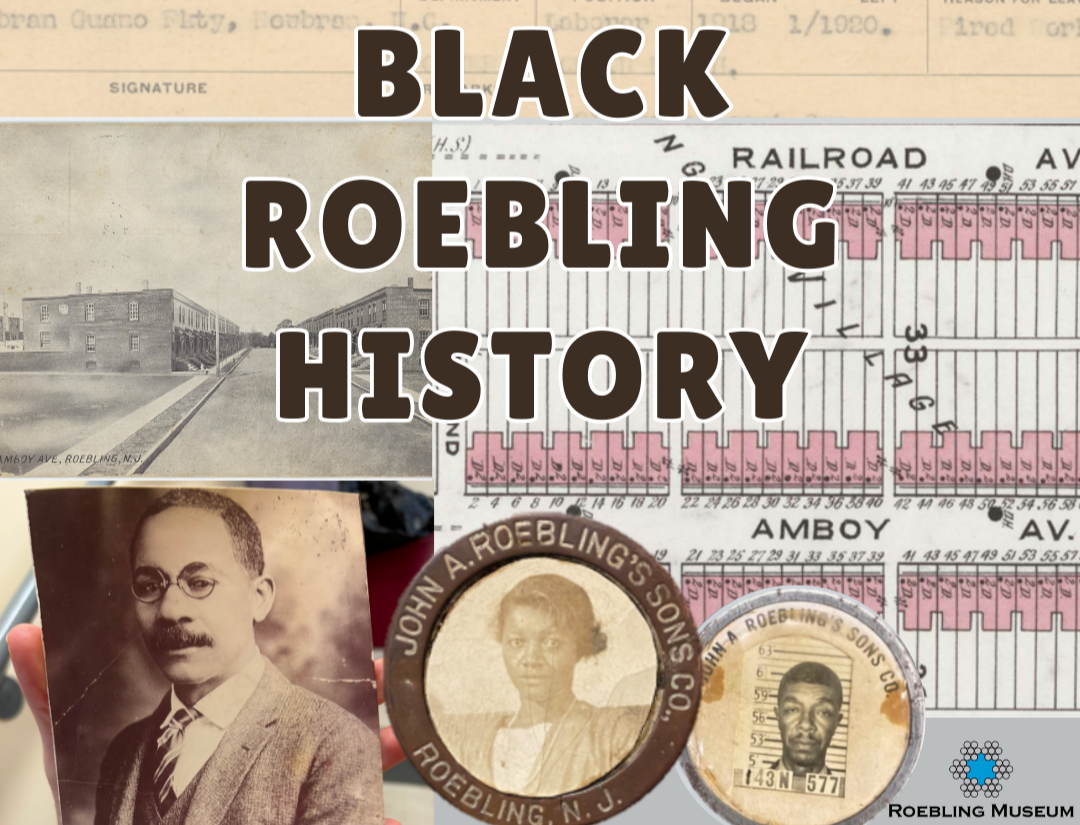
In 1914, there were only two Black men employed at the company. An article published in March of that year described these men as “old and trusted” but described most other prospective Black employees as “vicious and shiftless.” During World War I, however, Roebling feared that the global war would slow immigration from Eastern Europe and limit their main source of labor, so the company started to advertise that they would hire Black workers in local papers. Black workers as a result were recruited and housed in brand new brick rowhouses on the south side of the Pennsylvania Railroad tracks.
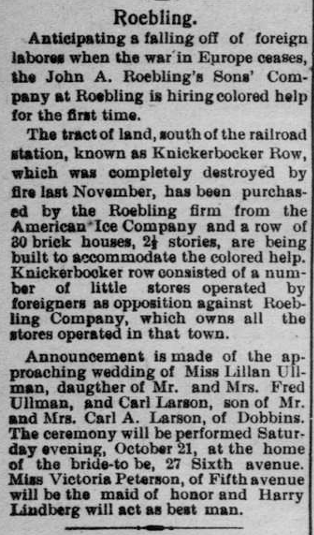
Mount Holly News
October 1916
2. Black families came from all over
Most Black workers had southern roots, but they moved north as part of the Great Migration. Nearly 6 million African Americans left the South between 1915 and 1970 because of the daily racial violence, economic exploitation, and political suppression. A handful of families came to Roebling from the same counties in Georgia and North Carolina. This created local networks of people from similar areas. For example:
Quitman County, Georgia: The Bennet, the Young, and the Lathrop families
Loretta, Virginia: The Reynold and the Dobbins families
3. Black workers were the least mobile in the company town
As families grew, they needed bigger houses. Workers living in rowhouses on Second and Third Avenues could inquire about moving into twin homes on Fourth and Fifth Avenues. This is visible on the census, as families who lived on Second Avenue in 1920 were living on Fourth or Fifth Avenue by 1930 or 1940. For Black families, however, there is no evidence that they had the option to move to larger homes. Almost all Black Roebling residents lived south of the railroad tracks on Railroad Avenue. The only exception was one of the two African American men who worked at the company before they started to hire Black workers in 1916.
4. Black education, recreation, and education were segregated
Like other ethnic groups in Roebling, Black residents had their own spaces for worship, leisure, and education. They hosted dances and socials at their own recreation hall at the end of the block on Railroad Avenue. Black community members also attended the Tabernacle Baptist Church, led by Reverend Edmund Alexander. The church was open between 1934 and 1941, and the recreation hall operated between 1938 and 1940.
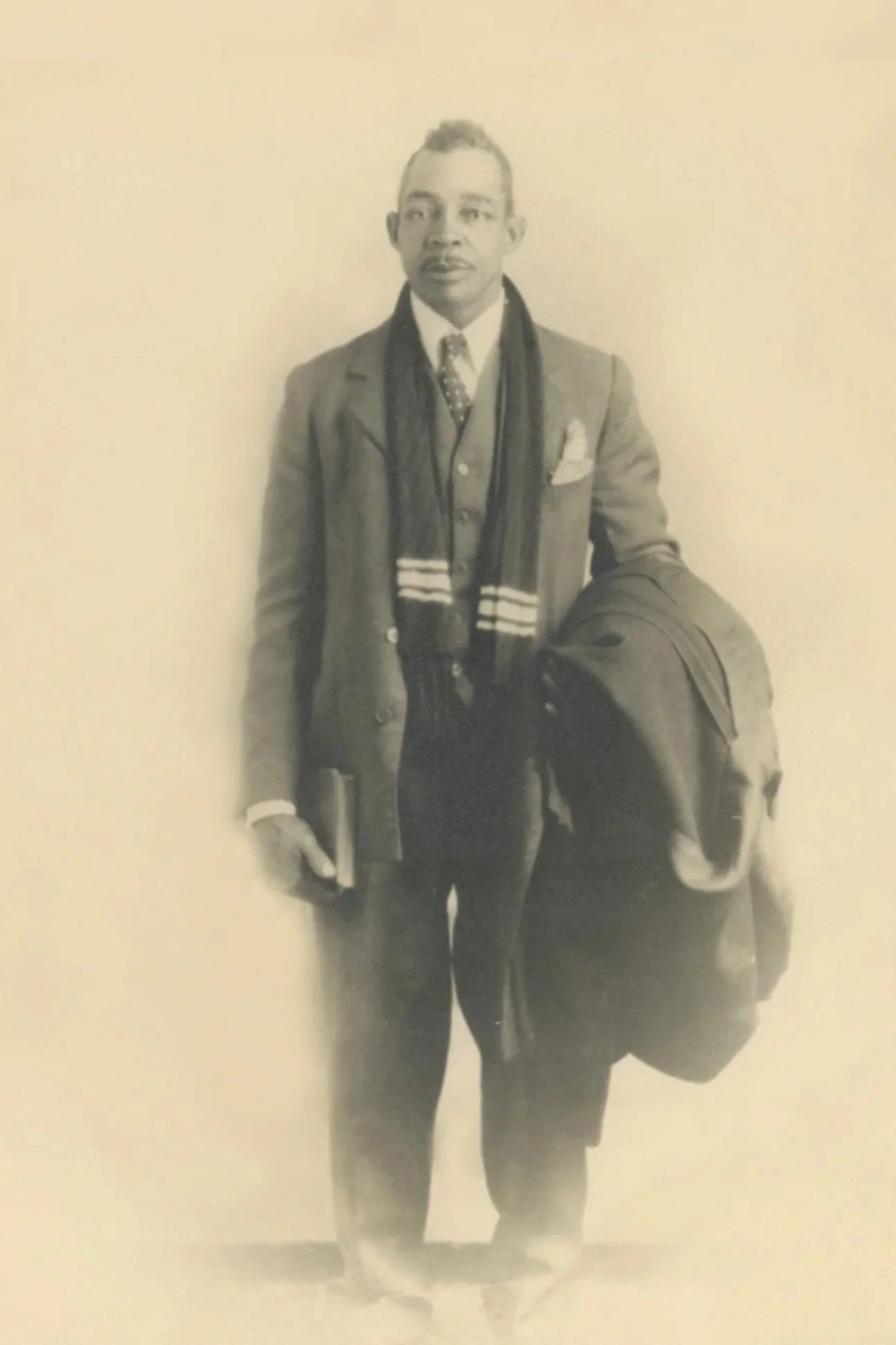
Reverend Edmond Alexander, shared by Alexander descendent Wanda Price
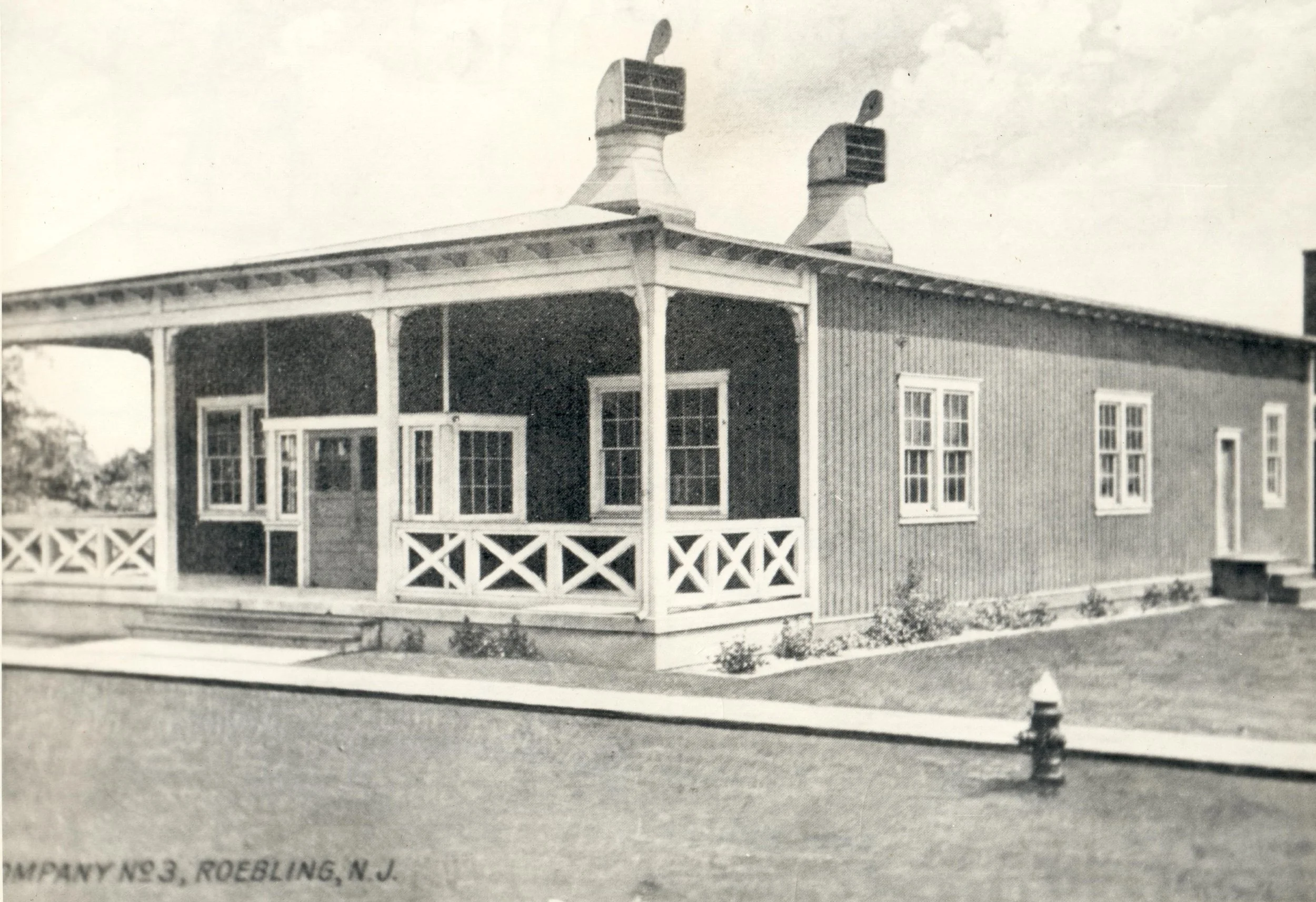
Tabernacle Baptist Church, at the end of Railroad Avenue. The building was originally used to hold a fire hose.
Until 1948, there was a segregated school for Black children, from kindergarten through sixth grade. Florence Station Colored School, or Roebling School #3, was a two-room schoolhouse located on Route 130. After sixth grade, the students would go to the Roebling Elementary School. Some oral histories also mention that Black students were segregated from white students in the Roebling School in the early 1920s. Wilbur Henry said “we had a room on one floor, and we had a Black teacher, and she had about 16 kids in the classroom.”
5. Black Roebling had its own society column
In two Black northern newspapers, the Baltimore Afro-American and the Philadelphia Tribune, subscribers could read about what Black Roebling residents were up to that week. The column was written monthly by Liller Bennet, a Black woman who resided at 67 Railroad Avenue with her husband Frank Bennet and stepchildren, Elizabeth and Rosville.
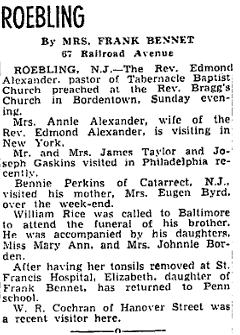
Afro-American
December 1, 1934
Bennet highlighted the people of the community: who was sick, who was recovering, and who was visiting in town or making trips back South. She also wrote about local events like weddings, birthday parties, and funerals. The fact that there was a society column in multiple newspapers shows there was a substantial enough Black population in Roebling to document the goings-on for Black readers in other places.